Showing posts with label Fitness. Show all posts

How To Strengthen Bones


An adult human being has 206 bones in the body. Mainly, bones consist of collagen fibers and an inorganic mineral in the form of small crystals. Living bone in the body contains between 10% and 20% of water. Of its dry mass, approximately 60-70% is bone mineral. The rest is collagen, which is the main fibrous protein in the body. The inorganic mineral calcium phosphate is found in the chemical arrangement termed calcium hydroxylapatite. This is the bone mineral that gives bones their rigidity.
Basically, the bone tissue is of two types - cortical and cancellous, which gives bone rigidity and a coral-like three-dimensional internal structure. Other types of tissue found in bones include marrow, endosteum, periosteum, nerves, blood vessels and cartilage.
Bone is an active tissue composed of different types of bone cells. Osteoblasts are involved in the creation and mineralization of bone; osteocytes and osteoclasts are involved in the re-absorption of bone tissue.
People lose bone mass or density as they age, especially women after menopause. The bones lose calcium and other minerals, causing bone loss. Bone loss can cause osteoporosis, where bones can become so thin that they break. Fractures from osteoporosis are a leading cause of disability. The good news: Osteoporosis isn't a natural part of aging. There's plenty we can do to keep our bones strong and healthy.
How to keep bones strong as we age :
Due to significant changes that affect adversely the health of bones with age, people have to take special precautions to prevent or slow down the process of changes.
Take nutrients for bones: Calcium is a crucial building block of bone tissue. Vitamin D helps body absorb and process calcium. Together, these two nutrients are the cornerstone of healthy bones. Milk and other dairy products are excellent natural sources of calcium. One can have adequate amounts of these by eating three servings of dairy products a day. Other good food sources of calcium include calcium-fortified orange juice, leafy green vegetables, and broccoli. Researchers believe that most people fall short on vitamin D, a critical nutrient. Older people are especially at high risk of vitamin D deficiency, the reason being that the body becomes less efficient at producing vitamin D as we age.
Experts recommend across the board 1, 000 mg of calcium a day for most adults and 1, 200 mg/day for women after menopause and men after 70. Normally, adults need at least 600 IU of vitamin D per day for bone health, whereas adults 70 years and older need 800 IU of vitamin D a day to prevent falls and fractures.
Besides these two essential nutrients, bones also require protein, vitamin B12, magnesium, vitamin C, and other nutrients. Unfortunately, the diets of many older people fall short on some of these nutrients. So, even if they're getting calcium and vitamin D, they're still losing bone.
Avoid highly processed food : Processing robs some foods of their natural nutrients. Even when vitamins or minerals are added, processed foods usually lack the full array of nutrients found in natural foods.
Choose whole foods :Choose foods with whole grains, which are far richer in nutrients linked to bone health. Look at the ingredient panel of breads, cereals, and other products made with grain. The first ingredient should be a whole grain.
Go for variety of foods : If you're cooking for yourself, it's easy to get stuck in a rut. You are likely to miss out on the variety that ensures a healthy diet. Try a new grain, such as bulgur or quinoa. Choose vegetables from across the spectrum of colors, from leafy greens to red sweet peppers. Nutritionists say that a colorful diet will help ensure a balance of nutrients necessary for good bone health.
Plan a regular schedule of exercise : Bones are living tissue like muscles and so they respond to exercise as well. Young women and men, who exercise regularly, generally achieve greater peak bone mass (maximum bone density and strength) than those who do not. For most people, bone mass peaks during the third decade of life, after which people begin to lose bone. As a matter of fact, exercise stimulates bone formation, when bone put under moderate stress responds by building density. Depending on your age and workout regimen, it can either increase or maintain bone-mass density.
The best exercise for bones is the weight bearing kind that works against gravity. Some examples of weight bearing exercises are weight training, walking, hiking, jogging, stair climbing, tennis and dancing. Some of exercises fail to exercise all parts of the body like walking will only strengthen muscles and bones of the lower part. And, therefore, a holistic plan of exercise should include working out all parts of the body. So, working out with weight-training machines, free weights, or resistance bands, as well as doing exercises that use your body weight as resistance, for example sit-ups and push-ups, or yoga will all build bone density.
It is advisable to begin exercising when one is young to build and maintain bone strength and mass. A suitable plan of exercise is also recommended, if you are at a high risk of fracture especially if you are over 70 or have broken bones easily in the past, to keep fit safely without causing further fractures. But this category of people should begin working out under the supervisions of an expert. A word of caution for those, who have not participated in any kind of exercise for a long time, is to consult a doctor before beginning an exercise schedule. After getting a green signal, they should approach an expert, who is well versed with all aspects of exercise, in order to take help in formulating a suitable exercise plan.
Limit caffeine : Having too much caffeine can decrease the amount of calcium you absorb. Adults should aim for no more than 400mg of caffeine per day (about 2-3 cups of coffee per day). Pregnant and breastfeeding women should have no more than 300mg caffeine per day.
Limit alcohol : Drinking alcohol can contribute to bone loss. If you drink, have no more than 2-3 drinks per day. Have no more than 15 drinks a week if you are a man and no more than 10 drinks a week if you are a woman.
Quit smoking : If you smoke, you may have faster bone loss and a higher risk of bone fractures than non-smokers.
The bottom line :
It is well evident that we all lose bone density with age, variability of which depends on our lifestyle. Our food and exercise habits greatly influence the health of bones. By eating foods rich in nutrients, avoiding processed foods, consuming whole and variety of foods, limiting intake of alcohol and caffeine, quitting smoking, and by doing regular exercise, we can halt or slow down the process of loss of bone density, occurring with age.
In fact, healthy bones contribute immensely to overall well-being of people, especially so when people are aging. With age people normally start losing bone density, due to which they become liable to sustain fractures. As a matter fact, with due precautions aging people can delay or prevent loss of bone density by making appropriate changes in their lifestyle.


Thank you for reading this article  share it with Friends.


A Guide To Total Body Fitness


EXERCISE FOR A BETTER YOU - INSIDE AND OUT
Being fit can give you immediate benefit of improved vigour, and it may offer long-term benefits as well.
# Gain More Energy. As you exercise regularly, your entire body becomes more efficient. Your heart begins to pump more blood with each beat and to beat fewer times each minute. Your body develops the ability to make more oxygen available to your cells. That means more energy - greater productivity, more stamina, and less fatigue.
# Feel Good. Exercise makes you feel good, both physically and mentally. It gives you a psychological lift and strengthens your sense of accomplishment. The discipline associated with exercise also makes you feel good about yourself: "I feel good that I walked today," or "When I run, I feel I have control over one area of my life."
# Look Good. Regular exercise plays an important role in helping to reduce body fat and weight and to develop muscle. Fitness can give you a better-looking, better-proportioned body: a flatter abdomen, firmer thighs, and slimmer hips.
# Feel Younger. Increasing your activity level can reverse or slow the changes that many people think are simply the unavoidable results of aging. In reality, lack of exercise usually reduces flexibility, strength, blood vessel elasticity, and lung functions; slows reaction time and metabolism; and increases body fat between ages 30 and 60.
# Build A Stronger Heart. Regular exercise may help reduce or modify some of the risk factors associated with heart disease, such as high cholesterol levels, elevated blood pressure, obesity, and stress. A three-year study at the University of Toronto showed that people who exercised regularly after a heart attack had less than a 5 per cent chance of having a second attack, while those who were sedentary had 22 per cent chance.
WHAT IS PHYSICAL FITNESS?
Physical fitness has two extremes: the well-conditioned person at one end and the completely inactive individual at the other. To be well-conditioned, you need to work on the four components of physical fitness: Body Composition, Cardiovascular Fitness, Muscle Fitness, and Flexibility.
# Body Composition: Body composition is the ratio between body fat and muscle. Too much fat and not enough muscle may increase your risk of heart disease, diabetes, gout, and arthritis and back problems.
# Cardiovascular Fitness: Cardiovascular fitness is the ability of the heart, blood, and blood vessels to transport oxygen to your muscles. A strong, efficient heart is important for stamina and may lower your risk of heart disease.
# Muscle Fitness: Muscle fitness is the strength, endurance and shape of your muscles. Good muscle fitness helps you maintain good posture; avoid lower back pain; and lift, carry, push, and press any objects. Regular exercise keeps your muscles well developed - an important ingredient in proper body composition. Calisthenic and weight-training exercises improve your muscle fitness. Aerobic exercises also can improve muscle fitness, although to a lesser extent.
# Flexibility: Flexibility is the range of motion possible at the joints of your body. Good flexibility helps you avoid lower back pain, plus joint, neck, shoulder, arm and leg injuries. Calisthenics, stretching exercises and yoga can help maintain or improve flexibility or suppleness.
GETTING OFF TO A GOOD START
Before you begin an exercise programme, discuss what you plan to do with your physician. Most physicians will adjust the programme according to your needs and health status.
HOW FIT ARE YOU NOW?
Evaluate your physical fitness level before you start a fitness programme. Ask yourself the following questions for the evaluation:
CARDIOVASCULAR FITNESS
Q #1: Do you exert yourself enough to work up a sweat for 20 minutes or more, three to four times a week?
Q #2: Are you physically active on the job? That is, does your work require you to move for at least 40 minutes non-stop, do vigorous physical activity, lift heavy objects?
BODY COMPOSITION
Q #3: Is your weight appropriate to standard height/weight charts?
Q #4: Are you satisfied with your body's muscle tone and the way your body looks?
MUSCLE FITNESS
Q #5: Have you been free of lower back pain (backache) during the past 6 months?
Q #6: Have your waistline expanded less than one inch since age 18 (women) or 21 (men)?
FLEXIBILITY
Q #7: Can you easily touch your toes without bending your knees?
Q #8: Are you currently free from aches, pains or stiffness in joints such as neck, shoulders, lower back, hips, and knees?
WHAT IS YOUR BODY TYPE?
In addition to your medical and fitness status, consider your weight and body type when starting a fitness programme.
BODY TYPES
Heavy: Substantial amount of fat with poor muscle development - usually very inactive.
Heavy Muscular: Substantial amount of fat with fair to good muscle development - usually formerly or occasionally active.
Thin: Very lean and very little muscle development - usually very inactive.
Now check the list below for guidelines on the best exercises for particular body types. But remember that there are always exceptions: some aerobic dancers are heavy and muscular, and some swimmers are thin. In general, the list highlights those activities from which you can expect the most success, the least frustration, and the best chance to staying with on the road to fitness. For example, a heavy person may not get the full benefit of jumping rope, running, or aerobics because of the stress that extra body fat puts on the legs.
# Heavy: Bicycling; Swimming; Brisk Walking
# Heavy Muscular: Aerobic Dancing; Bicycling; Racquet Sports; Swimming; Brisk Walking; Weight Training.
# Muscular: Aerobic Dancing; Bicycling; Racquet Sports; Jumping Rope; Running/Jogging; Climbing Stairs; Swimming; Brisk Walking; Weight Training.
# Thin Muscular: Aerobic Dancing; Bicycling; Racquet Sports; Jumping Rope; Running/Jogging; Climbing Stairs; Swimming; Brisk Walking; Weight Training.
# Thin: Aerobic Dancing; Jumping Rope; Running/Jogging; Climbing Stairs; Brisk Walking
ASSESS YOUR PERSONALITY
Your personality is basic to success in selecting the right fitness programme. If you are introverted, you will probably like activities that you can do alone such as bicycling, running, and swimming. If you like to do things with other people, an aerobics class, racquet sports, walking with a friend or perhaps weight training at a gym may be best. If you are competitive, one of the racquet sports may be a consideration. As an outdoor person, brisk walking, jogging, or roller skating might be one of your options.
CHOOSE A FITNESS ACTIVITY
There are many activities that help you get into shape. Brisk walking, running/jogging, swimming, bicycling, aerobics, jumping rope, climbing stairs, weight training, and racquet sports will all help you develop physical fitness. These activities very, however, in how effectively they help you develop the four fitness components.
To make the most of the activity you choose, it's important to consider how often, how vigorously, and how long you exercise.
FREQUENCY, INTENSITY AND TIME
FREQUENCY
You need to exercise three to four days each week. While some people exercise every day, it's good idea to take a day or two of rest, especially if you have been inactive for some time. If you are past age 40, exercising every other day gives your body time to recover.
INTENSITY
You have an efficient, built-in computer for determining how hard to exercise: your heart or pulse rate. To count your pulse rate, place your first and second fingers of one hand along the thumb side of your other wrist to feel for the pulse. Count pulse for 10 seconds, then multiply by 6 to find out how many times your heart beats per minute.
Your ideal exercise level is determined by your "training heart rate." Your training heart is approximately 60 to 85 per cent of your maximum heart rate. To make sure you are exercising vigorously enough; check your pulse occasionally to see if your heart rate falls within the training zone.
In addition to taking your pulse rate, you can determine whether you are exercising too hard by listening to your body. For example, if your breathing is laboured, slow down. A good guide is that you should be able to hold a conversation while exercising.
The list below shows average ranges; you should check with your doctor if you have a condition that would not allow you to safely reach these levels.
TRAINING HEART RATE:
Age || Beats per Min.
10-19: 123-174
20-29: 117-166
30-39: 111-157
40-49: 104-149
50-59: 99-140
60-69: 93-132
70+: 87-123
When considering the intensity of exercise, remember your fitness level and age. If you are just beginning a programme, exercise on the low side of your training heart rate. This is, do not exceed 10 beats above your lower reading. For a 40-year-old, for example, a pulse rate of 105-115 could be appropriate.
A warning: trying to beat the clock can defeat an otherwise good exercise programme. Thinking that if two miles in 17 minutes is good, then two miles in 15 minutes is better can be inefficient. When you run, bike, swim, or walk against the clock as if trying to excel in competition, you have moved from fitness to sport.
TIME
Ultimately you should aim for an exercise period of 30 minutes, enough to train your heart and reduce body fat. If you are just beginning an exercise programme after a period of inactivity, you will want to take it slowly, gradually building up to 30 minutes.
# Aerobic Dancing: Good for Cardiovascular fitness and Body Composition. Works most of the body.
# Bicycling: Excellent for Cardiovascular fitness and Body Composition. Strengthens leg muscles with little trauma
# Racquet Sports: Fair for Cardiovascular fitness. Good if both players are skilled and time outs minimal.
# Climbing Stairs: Excellent for Cardiovascular fitness and Body Composition.
# Weight Training: Excellent for Muscle Fitness. If done correctly, may improve Flexibility too.
# Yoga/Stretching: Excellent for improving Flexibility. No equipment necessary.
# Jumping Rope: Fair to good for Cardiovascular fitness. If skill level is adequate, you may get a good workout.
# Running: Excellent for Cardiovascular fitness and Body Composition.
# Swimming: Excellent for Cardiovascular fitness. Low injury rate. Excellent for heavier person or person with joint or arthritic problems.
# Walking: Excellent for Cardiovascular fitness and Body Composition. Easily built into the day. Low injury rate and very safe.
WARM-UP AND COOL-DOWN
You should spend 5 to 10 minutes warming up before each exercise session and 7 to 10 minutes cooling down afterward. This will help prevent injuries and sore muscles as well as promote flexibility. Walking vigorously and then walking while swinging your arms, twisting your upper body, hand shaking your hands and arms is a good warm-up. To cool down, spend a couple of minutes walking slowly and then do some exercises that stretch the upper, middle and lower third of your body.
MUSCLE FITNESS
Aerobic exercises are very effective in strengthening the heart and lungs, and are a good aid to weight loss. As beneficial as aerobic exercise is, however, it is not enough to add muscle and shape to your body.
The best activities for developing muscle fitness are calisthenics and training with weights (dumbbells or barbells, for example). These type of exercises allow you to place greater-than-normal resistance on your muscles, which result in improved muscle strength and endurance. But it is essential that you know how to perform the types of exercises correctly and safely.
CROSS-TRAIN FOR LONG-TERM FITNESS
Cross-training - complimenting the activity you have chosen with other forms of exercise - is an excellent way to maintain your interest in a long-term fitness programme and to make sure you develop all four fitness components. It also helps prevent injuries that might be caused by overstressing certain muscles and joints. Runners, for example, should consider doing other exercises to develop the upper body. Cross-training also allows you to target a particular area to improve your overall body proportions.
Thank you for reading this article  share it with Friends.
Article Source: http://EzineArticles.com/expert/Andy_Gibson/2325820

Top 10 Ways to Gauge Your Fitness

Résultat de recherche d'images pour "Fitness"
It may be difficult to measure your fitness level if you wish to understand how healthy you are, or if you are starting a new workout regimen. Everyone’s fitness level is different, and are personally based on factors in a few different categories including aerobic fitness, muscular fitness, flexibility and body composition. Fitness is more than how fast or long you can run, how much weight you can lift or what your body looks like in a bathing suit. If you want to know how healthy and fit your body is, try assessing your fitness level with these tests:

Resting Heart Rate (RHR)

Your resting heart rate can be a good, simple indication of your overall fitness level. The number of times your heart beats each minute, asses your aerobic fitness capacity. When your body is at rest and relaxed, count the number of heart beats you feel in a 60 second time period. A lower RHR corresponds to a stronger cardiovascular system and higher aerobic fitness level.

One Mile Run (or brisk walk)

This test indicates the level your cardiovascular fitness is at. Using a flat and measurable route, see how long it takes you to complete 1 mile running, or if you have to, walking quickly. If you don’t get winded or dizzy you are in a good fitness position; if you do, you need to work on improving your cardiovascular fitness. Ideally, you should be able to complete one mile in 9 minutes or less.

Push Ups

Push ups are a great exercise for overall fitness, and can be a good indicator of upper body strength and endurance levels. There are many people that have trouble performing even one proper push-up. This exercise involves the shoulders, chest, triceps, abdominals and some legs, and are a great way to asses your upper body fitness. See how many you can do in row; women should aim for 12 and men should aim for 20.

Wall Sit

This exercise is used to asses lower body and leg strength and endurance. “Sitting” in an invisible chair with your back up against a wall for as long as possible, is a good way to gauge your lower body fitness, as well as the endurance in your leg muscles. With your knees at a right angle, breathe freely while seeing how long you can hold the position.

Flexibility

Fitness is also a measure of how flexible your body is. To asses flexibility, sit on the floor with your legs stretched out, and then try to reach and touch your toes. If you can’t touch your toes this does not mean you are not fit, many people can’t reach this far. However, you definitely need to work on this area of fitness if you can’t reach much further than your knees. Flexibility is important to overall health, so work on stretching each day to improve flexibility and fitness.

Balance

Like flexibility, balance is also an important factor in good fitness. An overall healthy body relies heavily on being well balanced, and the risk or injury and broken bones from falls increases drastically with age. To asses your fitness level in this area, try standing on one foot with your arms at your sides for a period of one minute. If you feel as if you may fall, stand close to a wall, table or chair. Work on improving fitness levels in balance, try practicing exercises that focus on and promote good balance like yoga or Pilates.

Plank

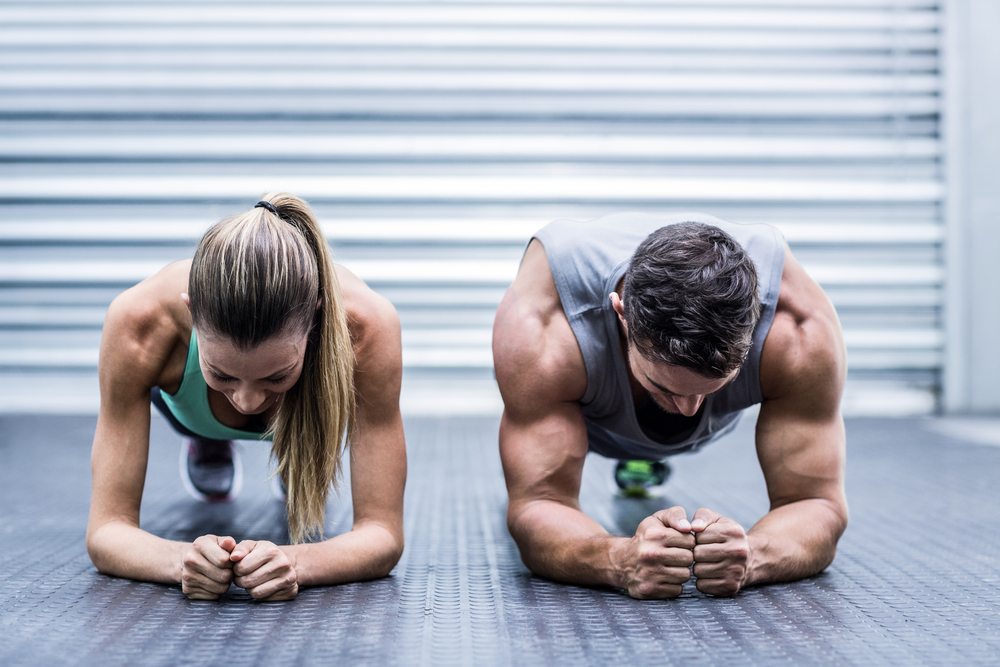
This is a great exercise to asses your core strength and stability. Your fitness level relies on those deep, stabilizing muscles that are in the trunk of your body. Your core strength and fitness can be assessed by practicing holding the plank position for as long as you can. Proper planks are held with the forearms on the floor, toes curled under, and your back straight and parallel to the floor. Doing this exercise each day will increase core muscles and overall fitness.

Vertical Jump

As kids, this part of our fitness level was certainly up to par, and used often. However, when you get older it is a much looked over part of overall health that can indicate the power exertion your body possesses as well as the power in your muscle fibers. See how high you can jump with markings on a wall or a 2-foot tall box.

Waist to Hip Ratio

This fitness test is used to asses body fat distribution. The waist to hip ratio indicates the proportion of fat stored around the waist compared to hip girth. Those who hold more weight in their midsection as belly fat, are more likely to experience health problems like heart disease and diabetes, as well as a lower fitness level. To calculate your waist to hip ratio, measure the circumference of the widest part of your hips, and smallest part of your waist. Then divide the waist measurement by the measurement of your hips. For women, a healthy ratio is less than .8, and for men it’s less than .9.

Burpees 

This full body exercise is a good way to indicate your fitness level if you can do even a few in a row. A burpee is an intense workout that challenges your muscular fitness, cardiovascular fitness, endurance and body power. Perform as many as possible in one minute to really test and push your fitness level.
Thank you for reading this article  share it with Friends.